2-8 Vol. 2A
INSTRUCTION FORMAT
2.2.1 REX
Prefixes
REX prefixes are instruction-prefix bytes used in 64-bit mode. They do the following:
•
Specify GPRs and SSE registers.
•
Specify 64-bit operand size.
•
Specify extended control registers.
Not all instructions require a REX prefix in 64-bit mode. A prefix is necessary only if an instruction references one
of the extended registers or uses a 64-bit operand. If a REX prefix is used when it has no meaning, it is ignored.
Only one REX prefix is allowed per instruction. If used, the REX prefix byte must immediately precede the opcode
byte or the escape opcode byte (0FH). When a REX prefix is used in conjunction with an instruction containing a
mandatory prefix, the mandatory prefix must come before the REX so the REX prefix can be immediately preceding
the opcode or the escape byte. For example, CVTDQ2PD with a REX prefix should have REX placed between F3 and
0F E6. Other placements are ignored. The instruction-size limit of 15 bytes still applies to instructions with a REX
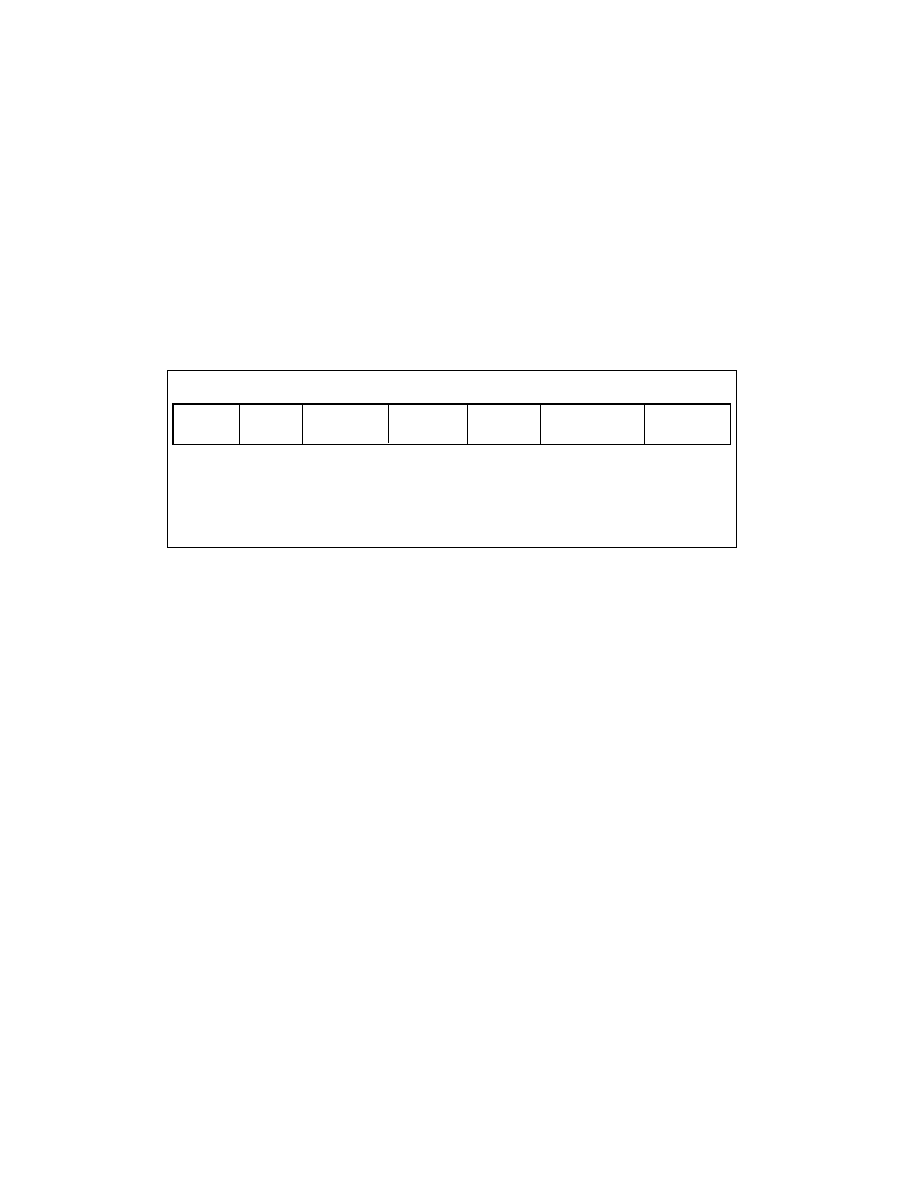
prefix. See Figure 2-3.
2.2.1.1
Encoding
Intel 64 and IA-32 instruction formats specify up to three registers by using 3-bit fields in the encoding, depending
on the format:
•
ModR/M: the reg and r/m fields of the ModR/M byte.
•
ModR/M with SIB: the reg field of the ModR/M byte, the base and index fields of the SIB (scale, index, base)
byte.
•
Instructions without ModR/M: the reg field of the opcode.
In 64-bit mode, these formats do not change. Bits needed to define fields in the 64-bit context are provided by the
addition of REX prefixes.
2.2.1.2
More on REX Prefix Fields
REX prefixes are a set of 16 opcodes that span one row of the opcode map and occupy entries 40H to 4FH. These
opcodes represent valid instructions (INC or DEC) in IA-32 operating modes and in compatibility mode. In 64-bit
mode, the same opcodes represent the instruction prefix REX and are not treated as individual instructions.
The single-byte-opcode forms of the INC/DEC instructions are not available in 64-bit mode. INC/DEC functionality
is still available using ModR/M forms of the same instructions (opcodes FF/0 and FF/1).
See Table 2-4 for a summary of the REX prefix format. Figure 2-4 though Figure 2-7 show examples of REX prefix
fields in use. Some combinations of REX prefix fields are invalid. In such cases, the prefix is ignored. Some addi-
tional information follows:
•
Setting REX.W can be used to determine the operand size but does not solely determine operand width. Like
the 66H size prefix, 64-bit operand size override has no effect on byte-specific operations.
•
For non-byte operations: if a 66H prefix is used with prefix (REX.W = 1), 66H is ignored.
•
If a 66H override is used with REX and REX.W = 0, the operand size is 16 bits.
Figure 2-3. Prefix Ordering in 64-bit Mode
REX
Immediate data
of 1, 2, or 4
bytes or none
Address
displacement of
1, 2, or 4 bytes
1 byte
(if required)
1 byte
(if required)
1-, 2-, or
3-byte
opcode
(optional)
Grp 1, Grp
2, Grp 3,
Grp 4
(optional)
Legacy
Prefix
Opcode
ModR/M
SIB
Displacement
Immediate
Prefixes